Today, I am excited to review the new Meyer 6 medium chamber alto saxophone mouthpieces made by JJ Babbitt in collaboration with Theo Wanne. There has been a ton of excitement and anticipation related to the release of these new JJ Babbitt/Theo Wanne saxophone mouthpieces since the earth-shaking news was first released in January of 2026 that these two legendary mouthpiece companies would be joining forces and I am super excited to try the first of these saxophone mouthpieces to be sent to me since the new collaboration. Let’s see what this new Babbitt/Wanne Meyer 6M alto saxophone mouthpiece has to offer.
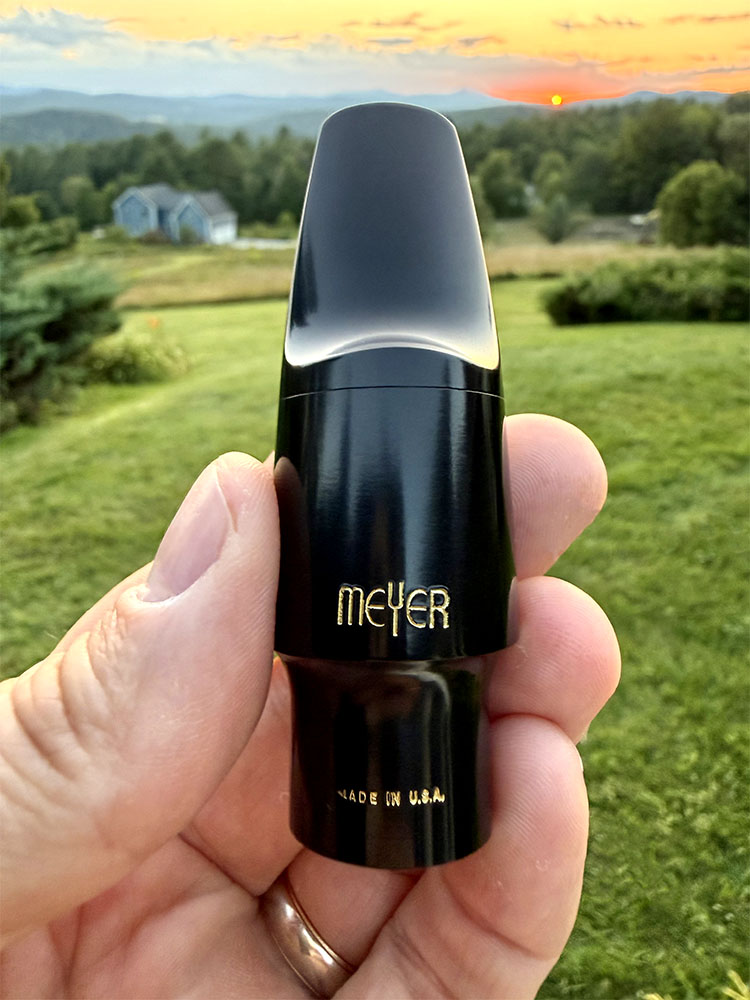
The New JJ Babbitt and Theo Wanne Meyer 6M Alto Saxophone Mouthpiece
Here is a quote from the JJ Babbitt’s website on the collaboration between JJ Babbitt and Theo Wanne and why we should all be excited:
“At JJ Babbitt, iconic designs are still rooted in the materials, feel, and tonal character that made Otto Link, Meyer, and Hite legendary. What’s changed is the precision with which those designs are now carried forward. Through our partnership with Theo Wanne, modern manufacturing technology and deeper craft training are being applied with purpose, not excess.
The result is a process that balances tradition and innovation. One that preserves the unmistakable core of these mouthpieces while delivering a level of consistency and reliability that today’s players expect. This is not about replacing human judgment. It’s about supporting it with better tools, better training, and better standards.
We believe legendary sound deserves nothing less.”-JJ Babbitt website

The New JJ Babbitt and Theo Wanne Meyer Alto Saxophone Mouthpiece
Here is another well written quote from the JJ Babbitt website on the new Meyer alto saxophone mouthpiece produced by JJ Babbitt and Theo Wanne:
Classic Sound, Modern Confidence.
For generations, Meyer has been the benchmark for saxophonists seeking a rare balance: warmth and clarity, flexibility and control, tradition and range. It’s our best-selling mouthpiece for a reason. Meyer doesn’t force you into a narrow sound, it gives you a centered tonal core and the freedom to shape it into your own voice, whether you’re blending in a section, leading a small ensemble, or stepping forward as a soloist.
But the Meyer story isn’t only about what the design can do. It’s also about how reliably that design is delivered.
In this new era, Meyer hard rubber mouthpieces are built through a process that combines JJ Babbitt’s proprietary rubber formulation, molding, and vulcanization with modern precision and tighter process control through our manufacturing partnership with Theo Wanne Mouthpieces. The tonal foundation begins with the material itself, not with pre-vulcanized bar stock, because the way Meyer’s hard rubber is created is part of what gives it its unmistakable core. From there, precision machining and informed finishing ensure the mouthpiece you pick up reflects the Meyer you expect.
Meyer is known for a warm, rich tonal core that stays clear under articulation and remains flexible across a wide dynamic range. Notes speak easily, articulation stays defined without becoming edgy, and the sound retains its body and center as volume and intensity increase. This balance allows players to move fluidly between subtle phrasing and more assertive playing without the mouthpiece feeling limiting or unstable.
Its classic chamber design and carefully balanced resistance profile create a responsive feel that supports both nuance and projection. The mouthpiece offers just enough resistance to provide control and focus, while remaining free-blowing enough to encourage a natural, unforced response. That combination has made Meyer a favorite among alto saxophonists in particular, while its versatility allows it to adapt comfortably to a wide range of styles, ensembles, and musical settings.
From advancing students developing their sound to seasoned professionals refining it, Meyer continues to be the mouthpiece players trust when they want a true jazz voice with room for personal expression, growth, and musical identity.
Meyer has always been an icon. Now it’s an icon delivered with a new level of consistency and confidence, without losing the character that made it legendary. – JJ Babbitt Website
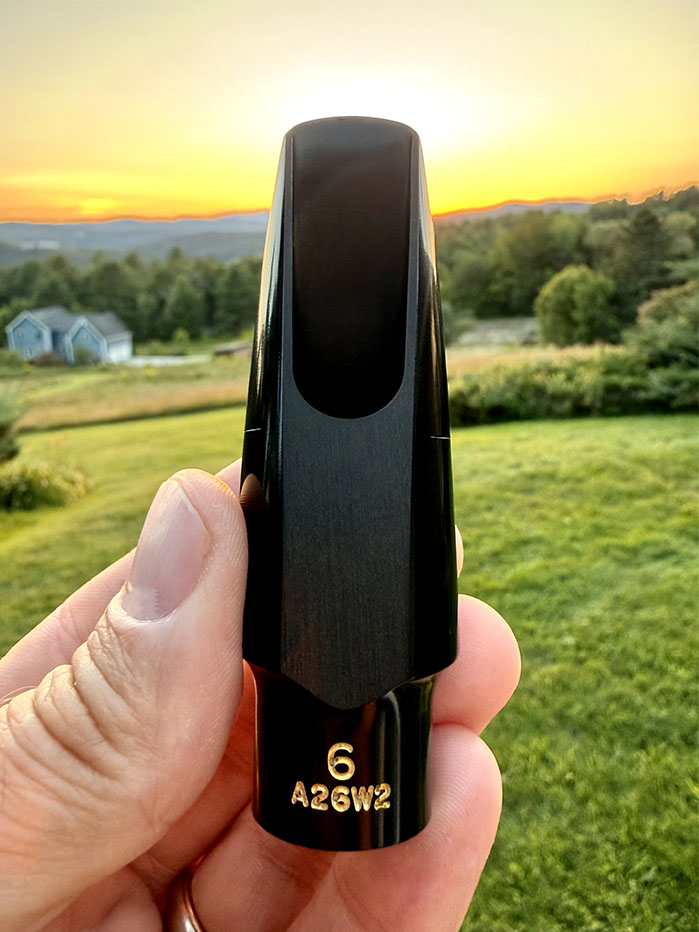
The New JJ Babbitt and Theo Wanne Mayer 6M Alto Saxophone Mouthpiece
I received a Meyer 6 alto saxophone mouthpiece directly from JJ Babbitt. The mouthpiece was packaged well and came in a standard looking white box with “MEYER” printed on the top. The side of the box has the chamber listed as medium, the facing length as medium and the tip opening as a 6. On the bottom of the box is a yellow sku/bar code label. I am told that these new Babbitt/Wanne Meyer mouthpieces have the yellow sku label as opposed to the previous Meyer models before the Babbitt/Wanne collaboration that had a white sticker.
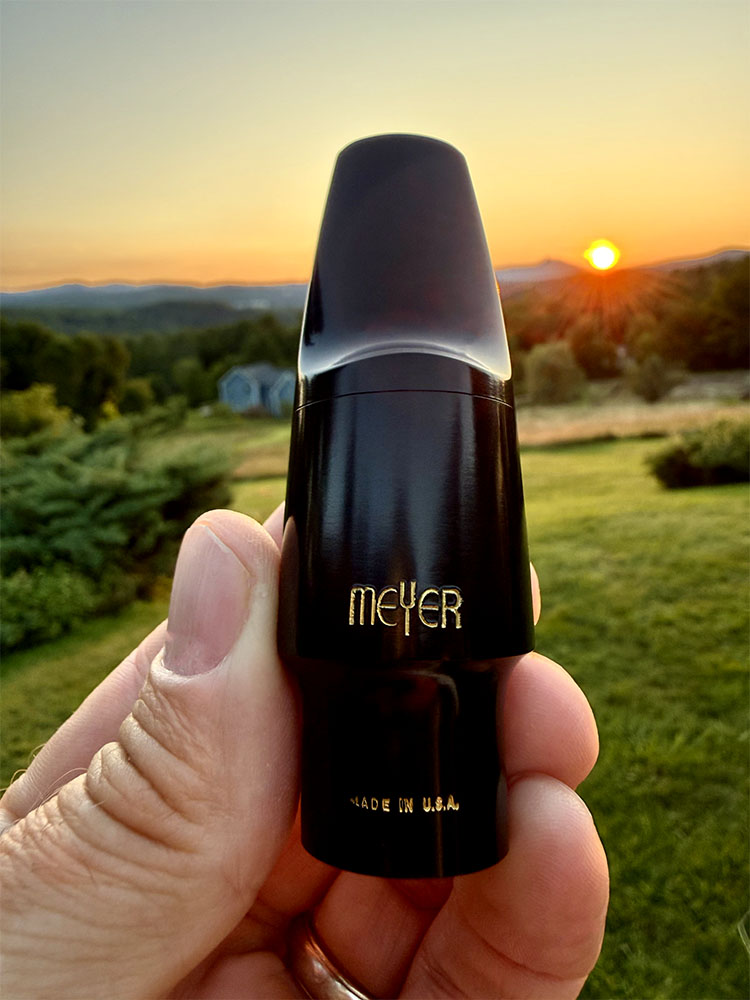
Upon first inspection, the new Babbitt/Wanne Meyer alto saxophone mouthpiece looked very similar to every other modern Meyer alto saxophone mouthpiece I have played on. The mouthpiece is engraved on top with the word “MEYER” and the top of the shank is engraved with “MADE IN U.S.A.”
The bottom of the shank is different from the Meyer mouthpieces of the past in that the tip opening of “6” is engraved with what I suppose is a number underneath it of “A26W2”. I believe this is probably a secret code that is to be entered to release the magic sonic properties hidden within this particular mouthpiece or, maybe it is just a serial number…..
I don’t see any engraving on the Meyer mouthpiece that refers to the size of the chamber, which would be nice to have on the mouthpiece, but the box states that this Meyer mouthpiece is a medium chambered mouthpiece.
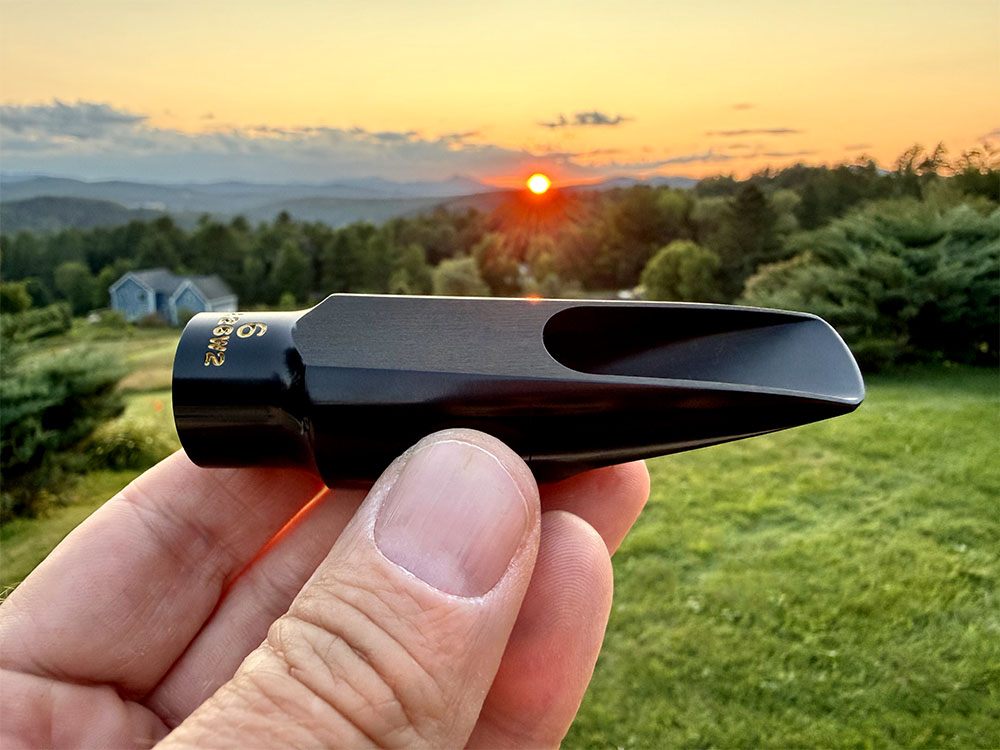
The New JJ Babbitt and Theo Wanne Meyer 6M Alto Saxophone Mouthpiece
The new Meyer alto saxophone mouthpiece comes in four tip opening options. 5M=.071, 6M=.076, 7M=.081 and the 8M=.086. I usually play alto sax mouthpieces with a tip opening between .076 and .080. Although, I do have a modern Meyer Bros 8 alto saxophone mouthpiece that I absolutely love so maybe I should update that. Ok, I usually play alto saxophone mouthpieces with a tip opening between .076 and .086. This Meyer 6M is at a .076 tip opening.
The tip rail is very close to the shape of my Boston Sax Shop 3 silver label reeds that I tried on the Meyer 6 alto sax mouthpiece. All the reeds I used while trying the Meyer alto saxophone mouthpiece for this review sealed well when performing the suction test and played great for me on the mouthpiece.
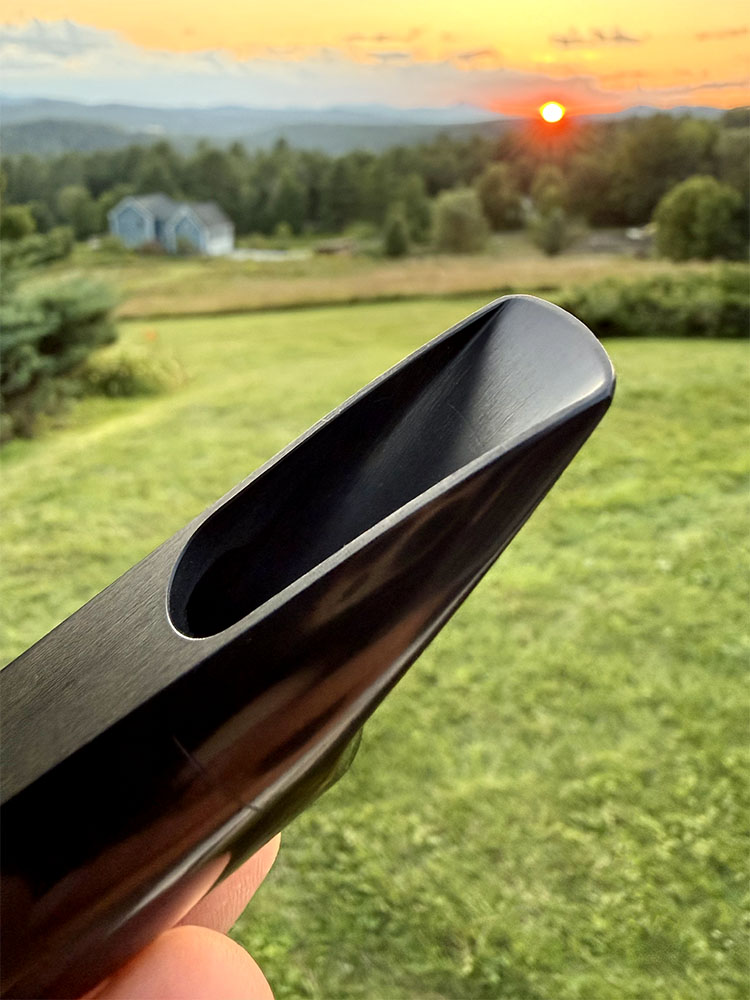
The New JJ Babbitt and Theo Wanne Meyer 6M Alto Saxophone Mouthpiece
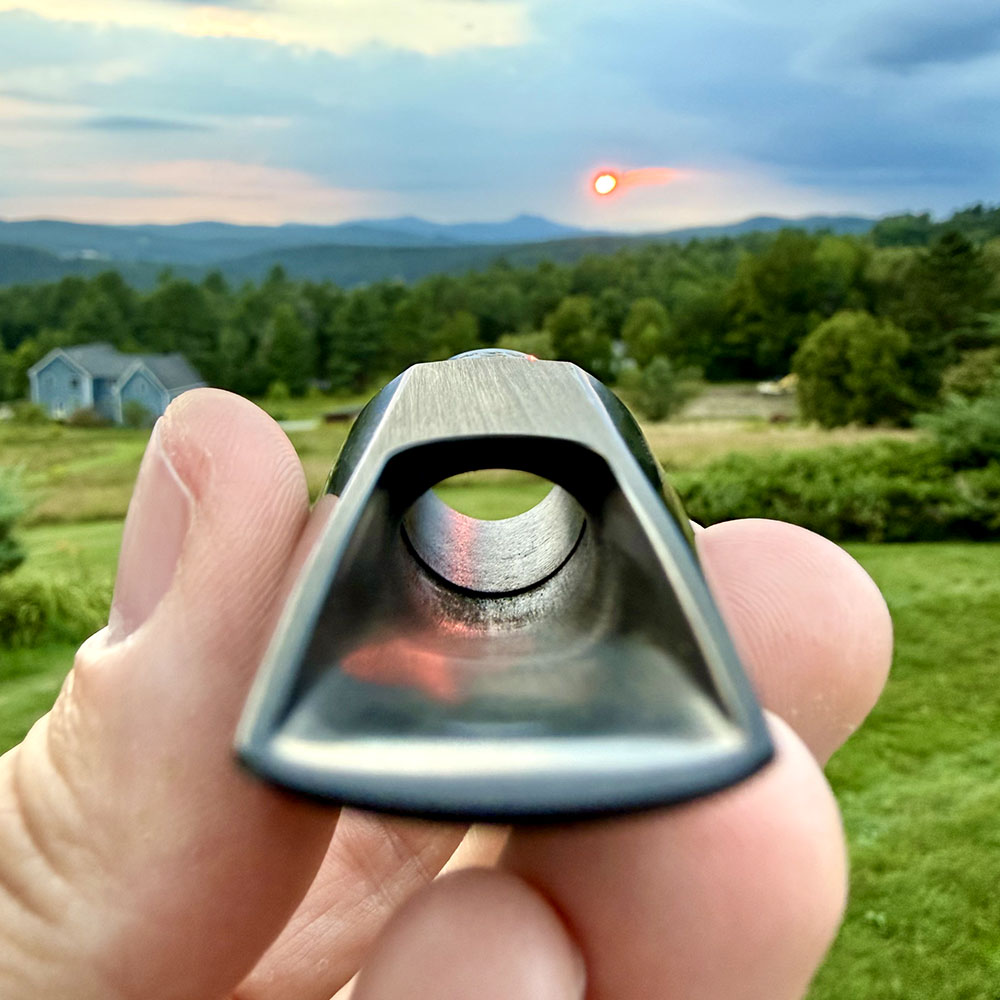
The baffle of the Babbitt/Wanne Meyer alto sax mouthpiece is what I would consider a medium rollover baffle height. It travels about a 1/4 of an inch and then rolls over where the baffle then proceeds to head at a greater angle towards the rear of the mouthpiece chamber. There is a dip in that run of the baffle through the chamber area creating a slightly lower chamber floor. The baffle looks even and balanced from side to side. The entire run of the baffle after the rollover has a slight curve from side to side. The mouthpiece side walls have a very slight scoop to them as they head towards the chamber as well.
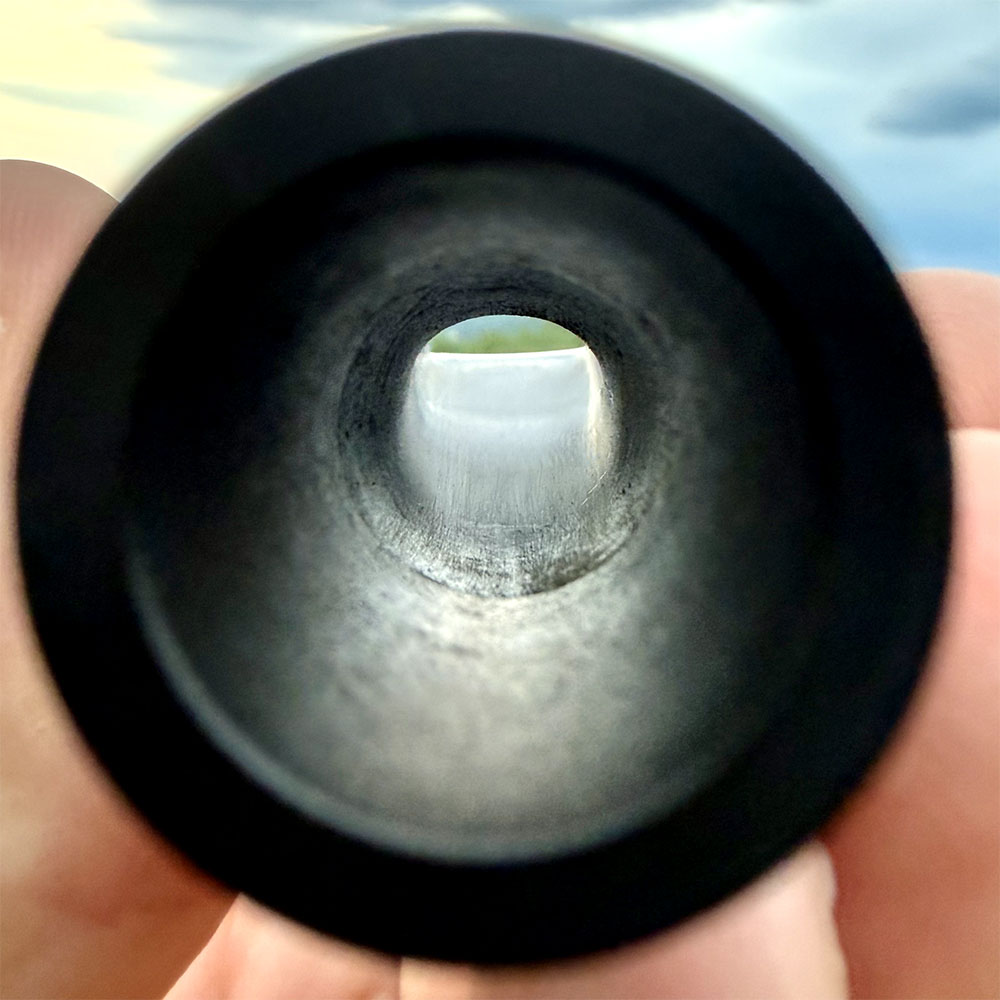
The mouthpiece chamber is what I would consider a medium chamber and the bottom floor of the chamber looks to be scooped out slightly when the light hits it at the right angle. The chamber is a little bit larger than the diameter of the bore of the mouthpiece. The roof of the mouthpiece chamber looks to be rather thick in comparison to other mouthpieces with thinner chamber roofs.
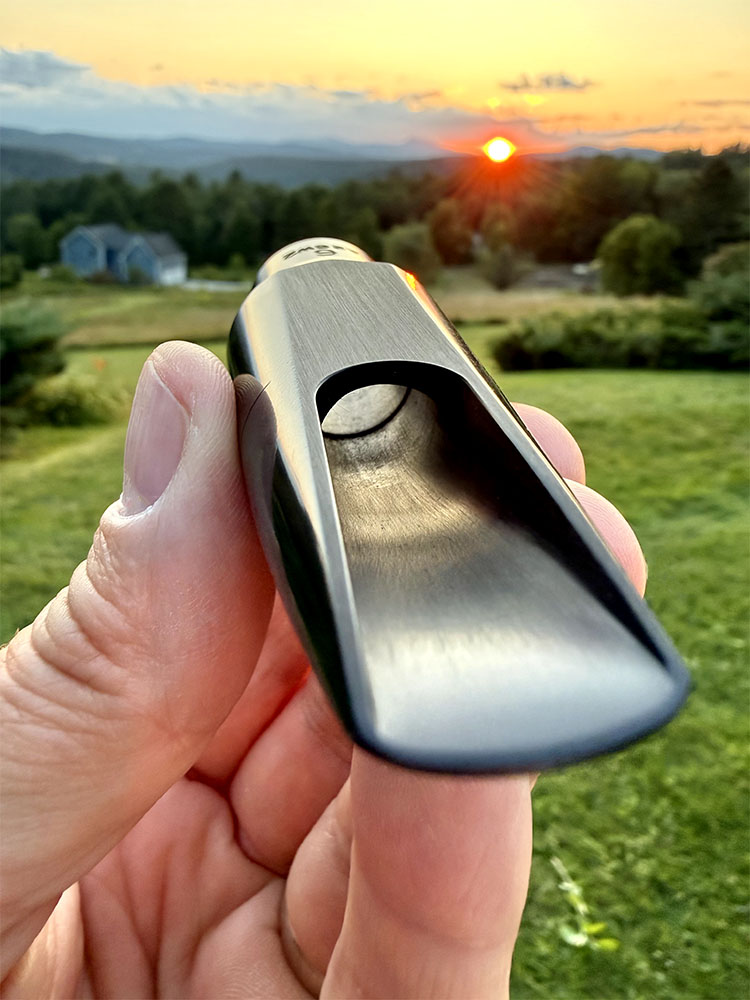
The New JJ Babbitt and Theo Wanne Meyer 6M Alto Saxophone Mouthpiece
The new Babbit/Wanne Meyer alto saxophone mouthpiece played great with a variety of reeds. For the sound clips below, I used a BSS (Boston Sax Shop) 3 silver label alto saxophone reed. The 3 strength BSS reed felt very comfortable on this Meyer 6 alto saxophone mouthpiece.
I have posted six sound clips of the Meyer alto sax mouthpiece below.
The first two sound clips are the same clip of my usual lines and licks that I play to test out every alto saxophone mouthpiece. The first clip has reverb added and the second clip is totally dry (no effects).
I like to add clips with reverb added as well as the “dry” sound clips to my reviews to give the listener a taste of what a mouthpiece might sound like with a little reverb added. This also gives the listener an idea of how the mouthpiece might sound when played in a big hall or theater with a natural reverb in the room. The “dry” recording helps the listener hear what the mouthpiece might sound like in a smaller room with less natural reverb in the room.
The last four sound clips are of me playing melodies that I play on most of my alto saxophone mouthpiece reviews these days:
- On the Sunny Side of the Street
- The Summer Knows
- When I Fall in Love
- When I Wish Upon a Star
I play these same melodies in many of my alto saxophone mouthpiece reviews so you can compare them to other mouthpiece clips on my site.
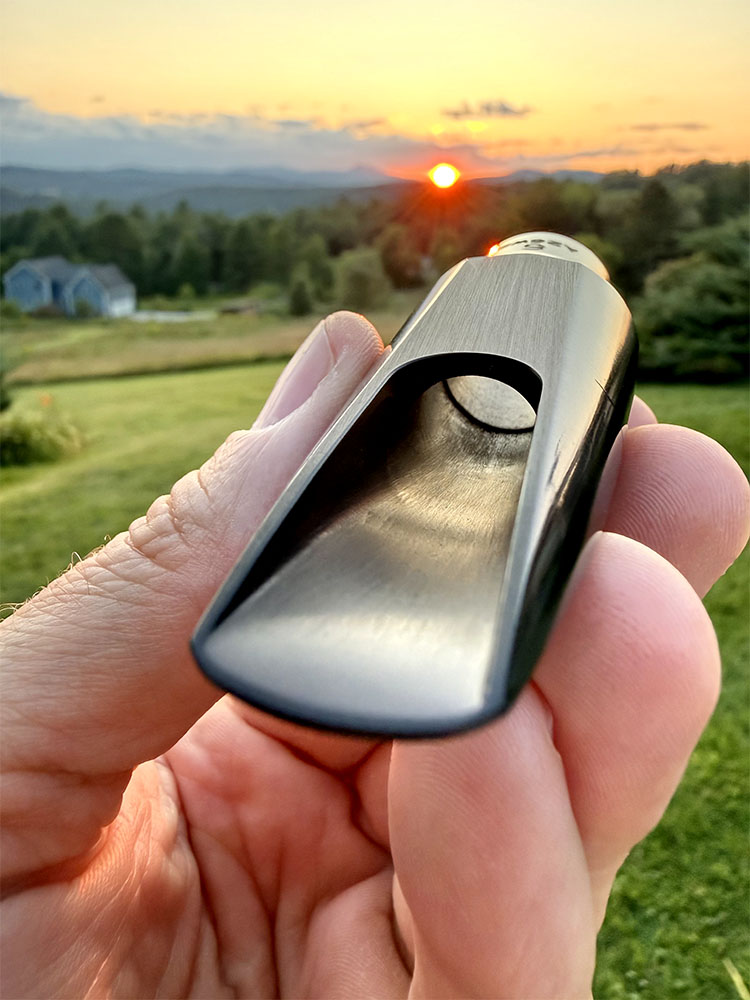
The New JJ Babbitt and Theo Wanne Meyer 6M Alto Saxophone Mouthpiece
I wanted to share this correspondence I had with Steve Rorie (Chairman & CEO of JJ Babbitt Co.):
Steve Rorie: Quick question …do you believe the Meyer alto is the best version of itself? We’re very proud of it as well as the new Otto Link rubber and metal models but am anxious for your perspective.
Steve Neff: I will say that I have probably tried a hundred Meyer mouthpieces over the years and this is a great one in my opinion. I still love my two 7 & 8 Meyer Bros NY Connoisseur alto sax mouthpieces but this new one is in that same ballpark as far as how well it plays.
Steve Rorie: You have experienced the improvements we’ve made ourselves when we released the Meyer Bros NY Connoisseur model. That’s proof positive of what can be achieved by skilled craftsmen and women. But to do it in volume as required for our standard Meyer alto is a greater challenge. The CNC technology and the technical as well as musical skill of Theo Wanne and his team was the key to the results you have now experienced with the new hybrid mouthpieces. Since I bought the company and became aware of the criticisms about the many years of inconsistency of Meyer and Otto Link, my son Trace and I have worked hard at honesty, transparency and fixing the issue. Partnering with Theo and his team provided us access to the technology and expertise to address it directly. The results have been fantastic.
To be transparent, I have had quite a few email communications with Steve Rorie over the past couple of years and he has always struck me as honest and highly devoted to making the mouthpieces of JJ Babbitt (Meyer, Otto Link and Hite) as excellent and as consistent as possible. In my mind, his shared collaboration with Theo Wanne drives home the point that Steve Rorie’s utmost concern is improving the reputation of JJ Babbitt and producing a mouthpiece that is excellent and reliable for every saxophone player who tries them.
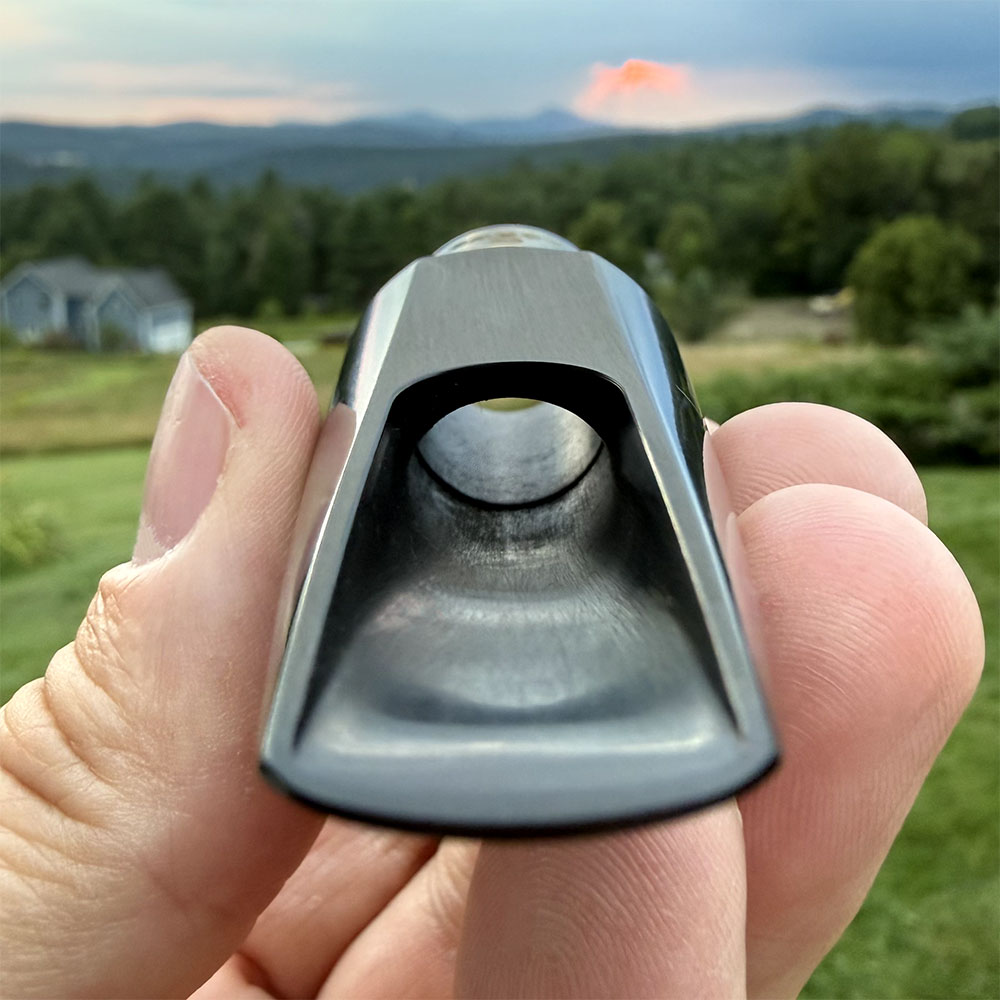
The New JJ Babbitt and Theo Wanne Meyer 6M Alto Saxophone Mouthpiece
So, how did this new Babbitt/Wanne Meyer 6 alto saxophone play for me? The Meyer 6 alto saxophone mouthpiece played exceptionally well. I found it to be a very dynamic and vibrant mouthpiece that played wonderfully from the first reed I put on it. Vibrant can be a vague term without explanation so I will describe this new Meyer 6 mouthpiece’s tone as a focused vibrancy. The tone has a tight core to it’s sound but also a vibrant energy in the tone that I really enjoyed while playing and listening back to the sound clips. That vibrant energy is simmering beneath the hood at softer volumes and as you play louder it comes out more and more.
I would classify the new Babbitt/Wanne Meyer as an alto sax mouthpiece that leans to the brighter side of that dark to bright tone spectrum I refer to when reviewing saxophone mouthpieces. At times, I felt I could lean towards the brighter end of the alto saxophone tone spectrum and at other times I could lean the other way towards the darker side of that same tone spectrum. Being able to lean to either side is a characteristic that makes a mouthpiece more versatile in my opinion. I even tried playing some classical saxophone literature with it and thought it sounded pretty darn good but that is coming from a jazz player so keep that in mind.
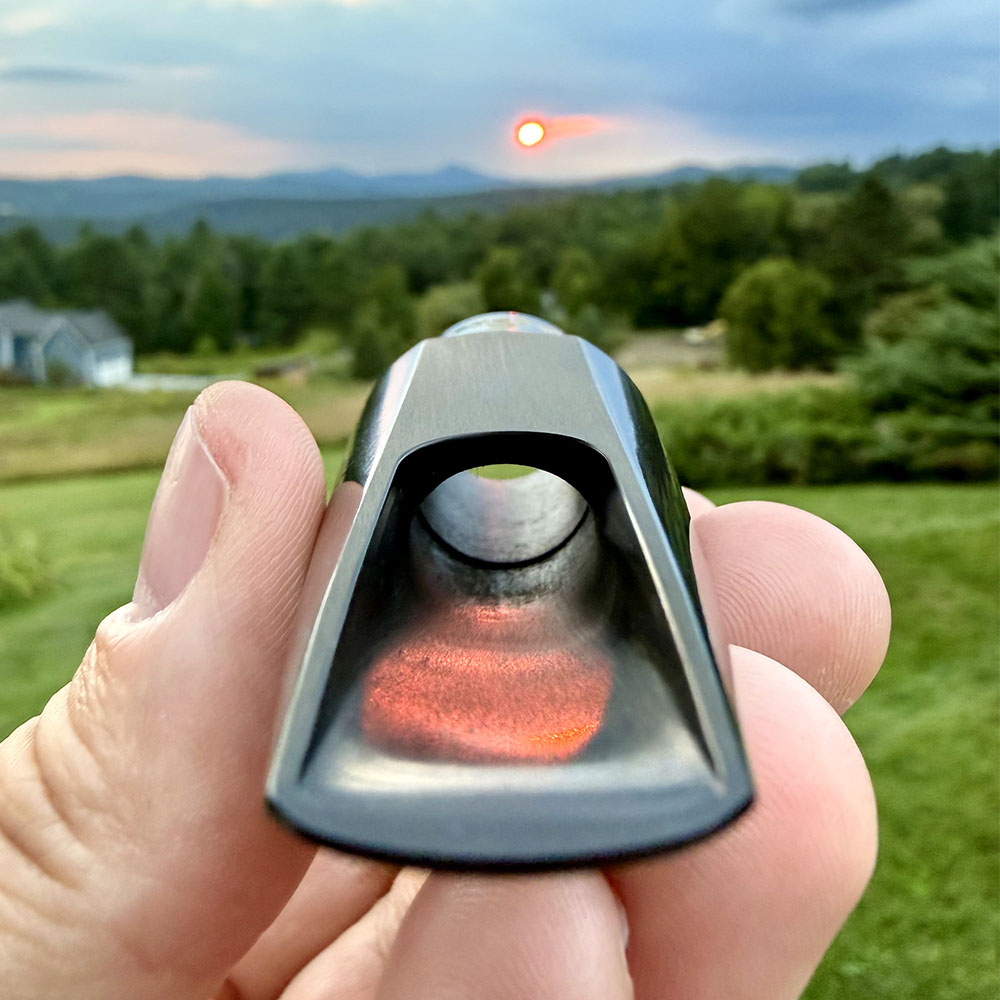
The New JJ Babbitt and Theo Wanne Meyer 6M Alto Saxophone Mouthpiece
This new Babbitt/Wanne Meyer 6 has that classic Meyer focused concentration to the tone that I always love with great playing Meyer alto saxophone mouthpieces. I immediately think of Phil Woods sound when I mention that Meyer “focused concentration” because he was such an influence on me when I was young. Listen to Phil Woods on “Warm Woods”, “Musique du Bois”, or “Live from the Showboat” to hear that “focused and concentrated” tone I am describing. That focused alto saxophone sound can carry to the back of an auditorium or cut through when playing in a big band.
The high notes have a bright ring to them that I find beautiful and pleasant to listen to. This bright ring to the tone is balanced perfectly with just enough fatness to the tone to make the sound balanced and even throughout the range of the saxophone.
The intonation on the new JJ Babbitt and Theo Wanne Meyer alto mouthpiece was superb and every note was in close proximity to being on the “0” on my tuner. The range of notes on the alto saxophone sounded even and balanced from note to note and the fast lines sounded smooth and flowing up and down the range of the saxophone.
The New JJ Babbitt and Theo Wanne Meyer 6M Alto Saxophone Mouthpiece
Another aspect of this mouthpiece that I loved was the dynamic range and ease of playing with different dynamics. I really dug the sound of this new Meyer alto saxophone mouthpiece at softer volumes as well as the louder volumes I typically play at. I found the tone and dynamic range easy to express myself and manipulate the lines with vibrato, dynamics, scoops and bends. I’m basically writing that it was easy to express myself with this new Babbitt/Wanne Meyer 6 alto saxophone mouthpiece.
I will add that, as I listened back to the sound clips, I was struck by how the notes, lines, and melodies seemed more expressive and easily molded, allowing me to convey what I was feeling in the moment. The mouthpiece seemed to respond naturally to subtle changes in my articulation, phrasing and vibrato, giving me greater flexibility to shape each musical idea and communicate more emotion through my playing. Believe me, after doing mouthpiece reviews for twenty years, when something stands out to me as special or different, I pay attention.
The New JJ Babbitt and Theo Wanne Meyer 6M Alto Saxophone Mouthpiece
The low register was full and round but I also loved the ability to sub-tone down in the lower register of the saxophone. The sub-toned low notes sounded soft, lush and full sounding with a velvety softness around each note’s edges.
The high notes were a joy to listen to as well. Although they had added brightness when pushed, the notes were round and full sounding and didn’t sound thin and weak as some mouthpieces can sound in the upper register of the alto saxophone.
The New JJ Babbitt and Theo Wanne Meyer 6M Alto Saxophone Mouthpiece
In my opinion, the JJ Babbitt/Theo Wanne Meyer alto saxophone mouthpiece is a terrific hard rubber alto saxophone mouthpiece for those looking for a classic vintage Meyer kind of alto saxophone sound. I will say that I have probably tried a hundred Meyer alto saxophone mouthpieces over the years (I used to go to the local music store to try the ones they had to pick out the best ones for my students) and this is one of the best Meyer alto saxophone mouthpiece I have tried. I would have no reservations in recommending these new Meyer mouthpieces to any serious alto saxophone players out there.
Here is a paragraph from my review of the Babbitt Meyer Bros alto saxophone mouthpieces but I am adding it here as well because I think it applies just as well : “A great characteristic to these Meyer mouthpieces is that they don’t pigeon hole you into one sound. Think about all the players that played Meyer alto saxophone mouthpieces! Cannonball Adderley, Phil Woods, Sonny Stitt, etc….. Heck, even Mark Russo! I heard Mark Russo playing live with the Yellowjackets back in the 80’s and wondered what mystery mouthpiece allowed him to get that really bright tone and killer altissimo…….. a Meyer 6 I believe it was! That blew me away! My point here, is that a lot can be done with these mouthpieces and the Meyer design allows the player to mold and shape the tone in whatever way they would like.”
If you like the sound and look of the new Meyer alto saxophone mouthpiece by JJ Babbitt and Theo Wanne, you can find them for sale at Sweetwater. I have agreed to be an affiliate for Sweetwater so if you purchase a Meyer alto sax mouthpiece from this link, I will receive a small commission on the sale from Sweetwater. (This helps to support my site and keep the saxophone related reviews, articles and transcriptions coming to you…..). Sweetwater even offers the option to pay in three installments as well which is nice.
I was confused whether the Meyer alto sax mouthpieces at Sweetwater were the old stock (the photos are of the old stock) or the new Babbitt/Wanne Meyer mouthpieces and asked Steve Rorie at JJ Babbitt who responded: “The standard Meyer alto sax mouthpieces Sweetwater currently stocks and sells are only the new TW/JJB co manufactured models like you are reviewing. And the ways to alert the buying public they are the new ones is the presence of a serial number on the shank, the yellow sku/bar code label on the bottom of the box rather than the traditional white label, and the mouthpiece is in a black velveteen bag without a lig or cap. They don’t have anymore of the old stock.”-Steve Rorie (Chairman & CEO of JJ Babbitt Co.) That clears that up, but I guess someone at Sweetwater has to get some new mouthpiece photos up to avoid further confusion…….
If you are lucky enough to play a new Babbitt/Wanne Meyer alto saxophone mouthpiece or have any other thoughts or comments, I would love to hear what you think in the comments below. Thanks, Steve
The New JJ Babbitt and Theo Wanne Meyer 6M Alto Saxophone Mouthpiece – BSS (Boston Sax Shop) 3 Silver Label Reed – Miscellaneous Lines and Licks-Reverb Added
The New JJ Babbitt and Theo Wanne Meyer 6M Alto Saxophone Mouthpiece – BSS (Boston Sax Shop) 3 Silver Label Reed – Miscellaneous Lines and Licks (the same clip as above)-Dry with No Effects
The New JJ Babbitt and Theo Wanne Meyer 6M Alto Saxophone Mouthpiece – BSS (Boston Sax Shop) 3 Silver Label Reed – “On the Sunny Side of the Street” – Reverb Added
The New JJ Babbitt and Theo Wanne Meyer 6M Alto Saxophone Mouthpiece – BSS (Boston Sax Shop) 3 Silver Label Reed – “The Summer Knows” – Reverb Added
The New JJ Babbitt and Theo Wanne Meyer 6M Alto Saxophone Mouthpiece – BSS (Boston Sax Shop) 3 Silver Label Reed – “When I Fall in Love” – Reverb Added
The New JJ Babbitt and Theo Wanne Meyer 6M Alto Saxophone Mouthpiece – BSS (Boston Sax Shop) 3 Silver Label Reed – “When You Wish Upon a Star” – Reverb Added


I’ve never really had a problem with stock meyers like others find inconsistent. I play a Meyer 5 alto. Maybe if I need a backup I’ll try one of these.
I think you will really dig it!
Wow, you sound amazing on that Meyer.Lots of power to it.You really sound like you were having a ton fun playing.I bought mine from Kessler and sons back in July, love it .
I have been enjoying my copy in a 7 tip – you can find so many colors with this setup, and tap into a pretty respectable lead sound as well as combo. I am still finding the best reed pairing but I’ll have to try the BSS silver reeds, thanks to your clips.
As a college professor, this is now the first recommendation on the shortlist of jazz alto pieces for most of my students, these new TW Meyers are truly remarkable for the price.
I got one of these in a 6 as well and think it’s terrific. My professional saxophonist friend based in NY tried it and agrees with you. He will recommend to students.
Thanks Steve.
I always enjoy your MP reviews. I agree with all you’ve said. (And you play so very well) I’ve become Meyer fan over the last decade, having come down from the open metals. I play M6 on Alto, baritone, and M5 on tenor. Plenty of tone colours on each. (And stacks of volume on the tenor M5 with a harder 4.5 reed).
Would love to see/hear your review of a M5 or M6 tenor MP.
thanks again, Paul
Wow that sounds pretty good 😀. How does this compare to the Selmer Jazz Flow mouthpiece? For my ears the Meyer is a bit more spread and more flexible but i think the Selmer could get more edge? What where your impressiones?
Are you still playing all Alto mouthpieces with your Reference54?
With best wishes
Tobias
Yes, with the Selmer Reference 54 alto sax. I think your description of the Meyer to the Selmer Jazz Flow is right on. The Meyer is a tad more spread and more flexible. The Jazz Flow is more focused and concentrated in tone. I’m not sure which is darker or brighter?? They both seem pretty close in that regard.
Sounds great Steve,as always. The mouthpiece sounds smooth and controllable throughout-in other words it sounds as you would expect a good Meyer to sound….in my experience with Meyer mouthpieces over the last 15 years, I’ve found that the tables are usually not flat and sometimes the rails have been off a bit too. You can usually salvage them with a bit of fettling, although I don’t mess with the rails if they’re not too bad. I had the same problem with the new Connoisseur alto Meyer Bros mouthpiece and got it playing very well after tweaking. Unfortunately a 6 becomes a 5 and a half..The older Meyers usually played OK out of the box. If Theo Wanne has sorted out the quality control/table/facing issues then these Meyers should really play well and be safe to recommend. Best wishes.
I love the sound of it. Very lively and resonant. I do need to find another piece as mine seems to be hit or miss with playability. I did try one at sweetwater and was impressed but am I understanding that this is the one with the brass ring on it?
As for tenor I have an old sugal super gonz copper shank 8 that plays amazing and recently replaced it with a wanne gaia 4. They are so close and yet the wanne seems to be more flexible. It’s probably a true 8. Theo makes some killer pieces for sure.
No, this does not have a brass ring. All the photos in the review are the photos of the mouthpiece. The Babbitt Meyer Bros mouthpiece are the ones with the brass rings.
Do you have a Super Gonz I or Super Gonz II. I played a Super Gonz I for 7 years back in the 90’s. That was a killer mouthpiece! Played a lot of gigs on that mouthpiece!
I’m sorry. As I was able to finally see the whole article I did see that it’s not. Thanks for confirming. Now how do you feel that it compares to the NY connoisseur mouthpiece? I guess it doesn’t really matter. Your sound is amazing on it.
Yeah, a Super Gonz 8 copper shank and is one of the early ones. My friend bought it at one of the jazz festivals we played at a very long time ago. Probably late 80’s, early 90’s. I hear him play it on The Martin and I fell in love with it. At some point he decided to let it go to me, he could probably easily start a mouthpiece boutique! He had a ton of them, probably over a hundred pieces if he had one. That was the only one that ever made me regret not buying a tenor earlier just so I could buy that mouthpiece too. But after the years it came into my possession and I never found a mouthpiece that I played that impressed me more. The Gaia is closest. It’s bigger, probably a true 8, and it seems to be a bit more flexible but I can’t say I’ll ever let the Gonz go. I love it that much.
I posted this in response to another comment that asked the same question:
Hi Lawrence,
But is it a Sugal Super Gonz I or Super Gonz II? The Gonz I had had a medium baffle and the Gonz II has a really high and long baffle. I have had both but the Gonz I was the one I played for 7 years. The Gonz II only lasted a little while. It was great for a Brecker type of tenor saxophone sound but was just too bright for my tastes on other kinds of music.
It is a Super Gonz 1; they weren’t all copper shanks were they? I feel like this also influences the sound.
The inevitable question: how does this compare to the Meyer connoisseur?
This is what I wrote in the review:
“I will say that I have probably tried a hundred Meyer mouthpieces over the years and this is a great one in my opinion. I still love my two 7 & 8 Meyer Bros NY Connoisseur alto sax mouthpieces but this new one is in that same ballpark as far as how well it plays.”
Thanks Steve. I read that but I was wondering if you wanted to elaborate. But really, same ballpark does say a lot if you know how Meyers play. Thats a crazy good deal for the asking price!
Yeah, I wasn’t much on details but that is because the two Meyer Bros NY Connoisseur alto mouthpieces I have are a 7 and an 8. This new Babbitt/Wanne Meyer is a 6 tip opening. I’m not sure that any perceived differences I may feel or hear are the differences in the mouthpiece or the differences in the tip opening. I would have to play the three next to each other to really grasp any differences but even then, would it be a difference between the mouthpiece model or the difference with the tip openings. Like I wrote in the review, I do feel like they are all great playing Meyer mouthpieces and I would have a heck of a time figuring out which one to choose if I was in a store and could only buy one.
First of all thanks for all you great reviews!!!
I’ve been playing Meyer Alto 5 and 6 medium chambers for 40 years on my alto. 2 years ago I had to exchange my old Meyer for the connoisseur series with the brass ring – I loved it – but 6 months ago from one day to the other it didn’t play right anymore. First I thought the ligature might be bent – I tried several – not a big change. I tried all kinds of reeds – not big change…Very strange – I can’t see any dents on the mouthpiece. Did anything like that ever occur to you?
So now I need to get another Meyer and I’m wondering about the difference of this new Meyer compared to the copy of Jim Snider’s old Meyer that you were raving about in an earlier review – any thoughts on that?
That stinks! I’m not sure what would cause that sudden change. You didn’t leave it on the dashboard in a car in the hot sun did you? The only time I have had something like that happen was when I had a wooden Lebayle tenor sax mouthpiece that must of warped or something from the moisture. It played incredibly for two weeks and I thought it was the best tenor sax mouthpiece I had ever played and then it suddenly wouldn’t play. It started squeaking and squawking and it wouldn’t get suction during the mouthpiece test. Does your Meyer get suction with the mouthpiece test? I’m curious.
The Morgan Kind of Blue Cannonball mouthpiece is a copy of Cannonball’s original large chambered Meyer mouthpiece as you can see when you read the review. In my mind, the large chamber makes it a totally different sound. It’s much fatter sounding like I associate with Cannonball’s sound. The Meyer Bros NY Connoisseur and new Babbitt/Wanne Meyer mouthpieces are more focused and concentrated sounding. The way I imagine it is that the latter mouthpieces are like a Phil Woods sound and the former Morgan KOB mouthpiece is more like Cannonball’s sound. Of course this is all dependent on the player and how they play and want to sound. I should do a comparison between the Morgan KOB Cannonball Meyer copy, the Meyer Bros NY Connoisseur mouthpieces and the new Babbitt/Wanne Meyer mouthpieces. Actually, I would add the Phil-Tone Topaz as well as I really love that one as well. That would be a fun comparison.
Thanks for your quick and thourough response!
And thanks for the suction tip test – it didn’t work on it!
I then compared it to two of my other Meyers:
a) my medium 6 from the 80’s which I bought as a beginning student
b) my medium 6 from the 90’s – which supposedly was built with some “old rubber” which they had found – limited edition for a higher price.. (with a brass ring that a friend had done)
c) the connoisseur model medium 5. I bought about 1 1/2 years ago – which worked fine for about a year and then didn’t work anymore
I just made 2 little Videoclips (2 minutes each) with those 3 mouthpieces:
1. the suction test with amazing differences
https://youtube.com/shorts/J2LEDg-cEmk?feature=share
2. a playing test..
https://youtube.com/shorts/_ytiIuKQWgg
I’m curious of your opinion
Thanks so much for your inspiring work and your insights ( I also bought several of your courses)
the bite marks worry me.
I believe those are just in the bite pad…….
me too 😉
I have sharp front teeth – and I’ve been playing the mouthpiece for 30 years…
Hi Olaf,
Is that a brand new reed you are using for the suction test? Many times if I use a reed on a first mouthpiece the reed will not get suction on a second mouthpiece because it has molded to the unique facing curve of the first mouthpiece. I’m just curious if the Meyer Bros Connoisseur doesn’t get suction with a brand new reed as well. If not then you would have to send it to a refacer to diagnose the issue and then fix it for you. I’m not sure why it would have worked fine for 12 months and then suddenly stopped working if there are no nicks in the tip or side rails. Where are you located? If over in the European side of the world, Phil Engleman provides great refacing work.
Also…..the middle mouthpiece with the “old rubber” and gold metal band definitely sounds the best of the three to my ears.
Thanks for taking the time to listen to my videos! The “old rubber” is also definitely my favorite mouthpiece. I’m located in Germany and I’ll check out Phil Engleman – thanks for the tip!
This would be pretty killer Steve. I would also love for you to do a review on the Jody Jazz Dark model as well.
I would love that as well but I have reached out to Jody quite a few times and he has never sent anything out for me to review.