For the last couple of weeks, I have been checking out two amazing transcription books by Jeff McGregor entitled Chris Potter-Transcriptions and Essays and Mark Turner-Transcriptions and Essays. I already reviewed the Chris Potter Transcription book, and today I will be reviewing Mark Turner-Transcriptions and Essays. Mark Turner-Transcriptions and Essays by Jeff McGregor If you […]
Jazz Improvisation
Chris Potter-Transcriptions and Essays by Jeff McGregor Review
For the last couple of weeks, I have been checking out two amazing transcription books by Jeff McGregor entitled Chris Potter-Transcriptions and Essays and Mark Turner-Transcriptions and Essays. Chris Potter-Transcriptions and Essays by Jeff McGregor If you were to gather ten saxophone players around a table and have a discussion about who the cutting edge […]
The Deep Wisdom of Victor Wooten
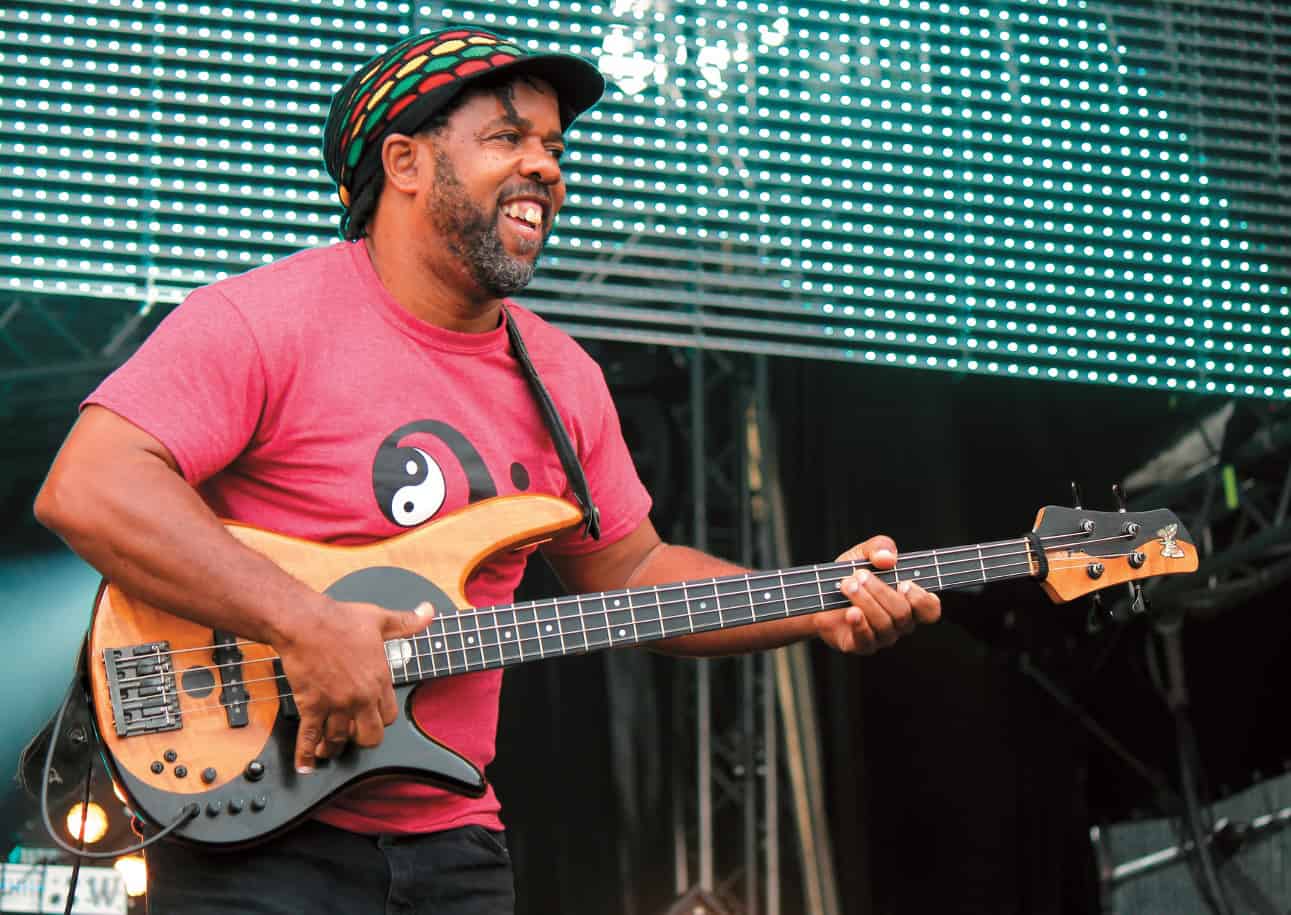
I discovered this gold nugget of a video this morning while drinking my morning coffee and perusing around Youtube to see what was new today. Victor Wooten is an amazing bass player and musician and in this video he teaches some core truths about music in an amazing way! Check it out! (I have started […]
A Key to Jazz Improvisation Success: Boredom and Repetition

Here’s a great article that a fan of my site emailed to me a few months ago. Although the article is dealing with the martial arts, the principles written about in this essay can just as easily be applied to music and jazz improvisation. When the writer writes about “kata” imagine that he is referring […]
FREE 12 Major Scales Practice Sheet
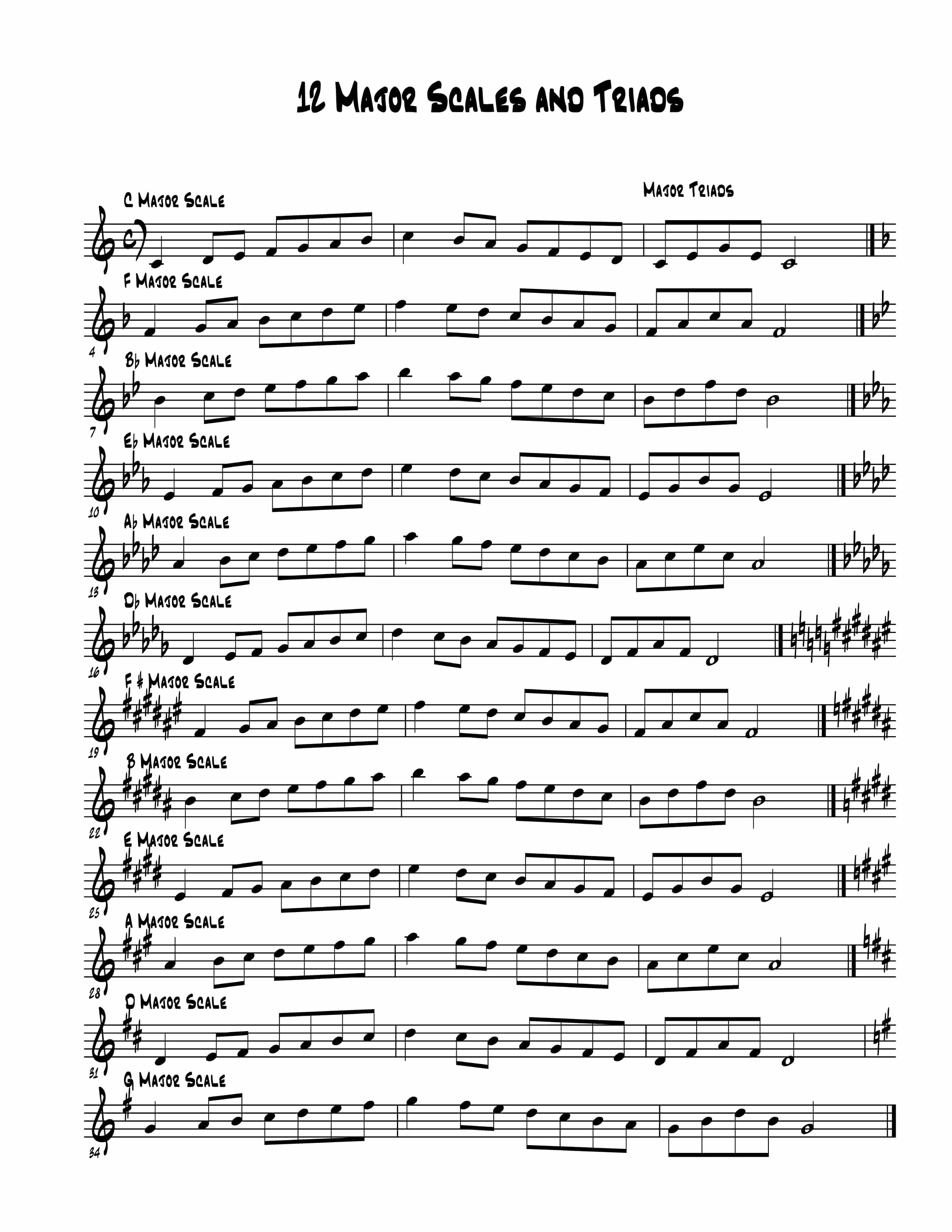
Here’s a free sheet I give to all my students to learn their 12 major scales and major triads. When I teach my students the major scales, I teach them to memorize all the scales on this sheet exactly as written. They should be able to play each scale on the sheet immediately when asked […]
Free Demo Lesson on Altered Pentatonic Variations
I decided to offer another free video lesson based off my book Mastering Altered Pentatonics for everyone. This is a short demo lesson based off of my full length lesson “Creating Modern Lines with Altered Pentatonic Variations-Lesson 1“. The full lesson includes a 38 minute video lesson and the 36 page PDF of the altered […]
Free Chord Tone Cheat Sheet
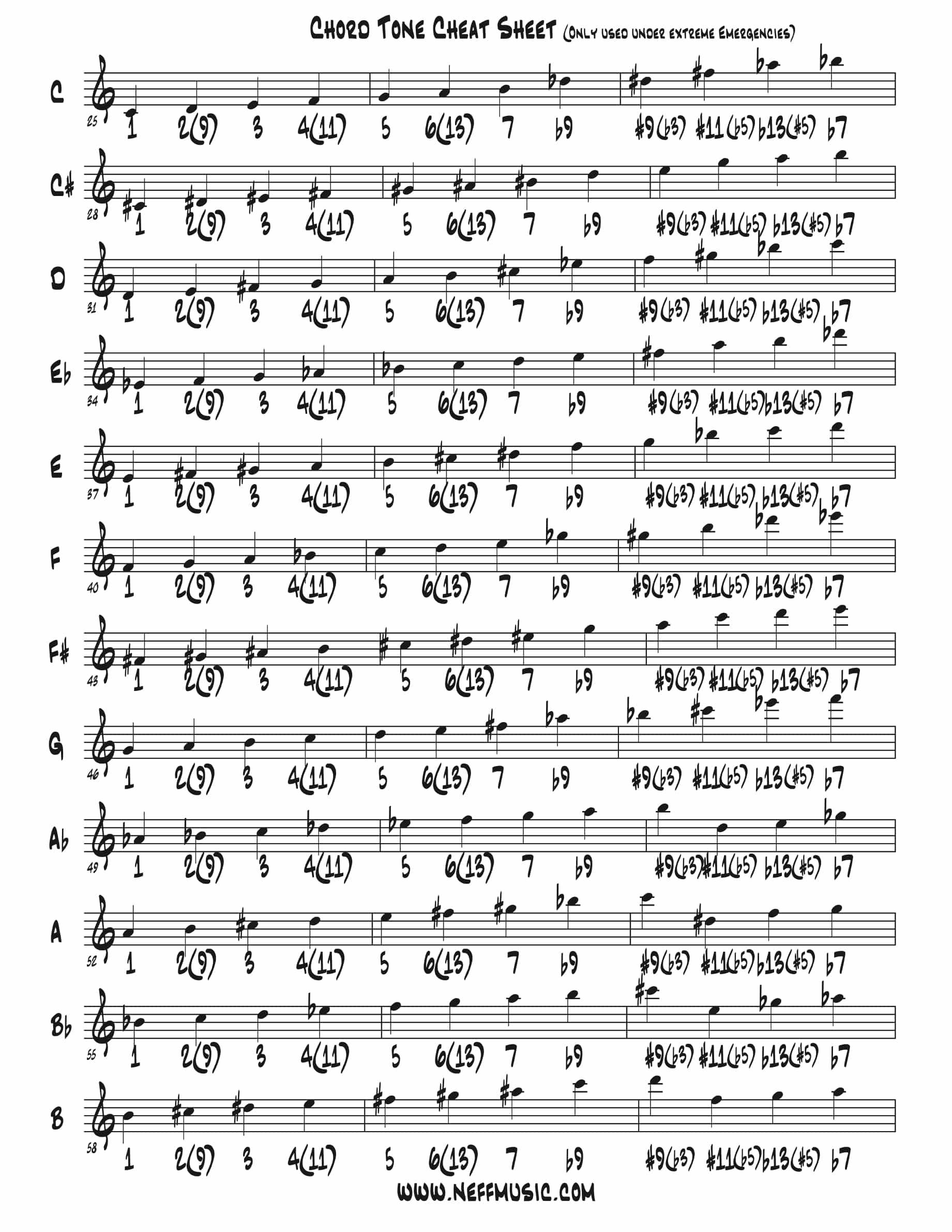
Here’s a great tool that I made for my students years ago that I totally forgot about. It’s called the Chord Tone Cheat Sheet. I had a Skype student the other day that said he was looking for something like this on the internet but couldn’t find anything. As he was speaking, I had this […]
FREE 12 Major Blues Scale Sheet
Here’s a free sheet I give to all my students after they learn their major scales. It’s just a sheet with all the 12 Major Blues Scales on it. If you take a look at the sheet you might notice that the scales are the same as the scales on my free 12 blues scales sheet […]
The Art of Jazz Improvisation-Communication
I was browsing the internet this morning when I happened upon these two amazing videos below. It struck me that as teachers and students, we are so often teaching jazz improvisation in a one dimensional realm. We talk about scales, licks, chords and patterns. We go home and practice by ourselves with our play along tracks […]
My “Secret” List of the Funkiest Minor Tunes to Practice to……..
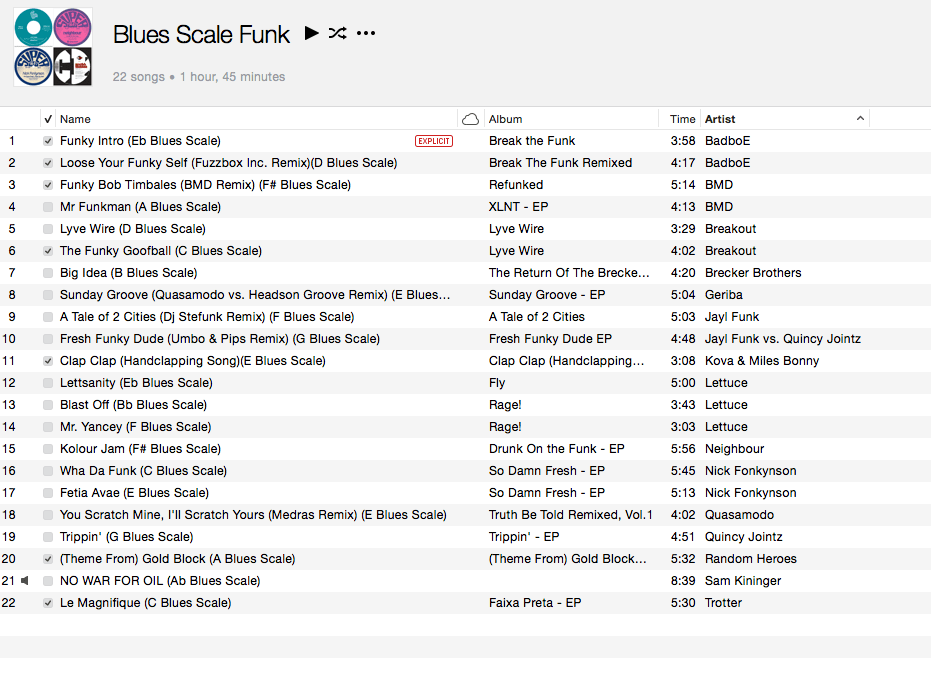
Today, I’m going to share my “secret” list of funk tunes that I have been practicing to for a few years now. These are tunes that I bought on iTunes because I was sick of the generic Jamey Aebersold tracks that we all practice to. I spent many hours one week going through iTunes […]
Body and Soul: The Evolution of a Tenor Saxophone Standard Review
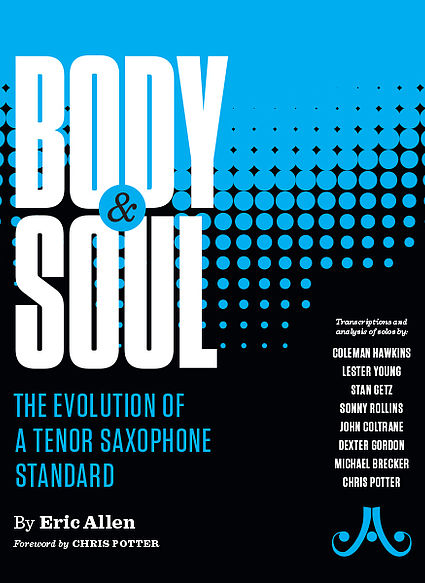
For the last couple of weeks, I have been diligently working through a great new book by Eric Allen entitled Body and Soul — The Evolution of a Tenor Saxophone Standard: Transcriptions and analysis of solos by: Coleman Hawkins, Lester Young, Stan Getz, Sonny … Brecker, Chris Potter, Spiral-Bound Book Body and Soul — The […]
The #1 Thing You Need to Do To Become a Great Improviser

I’m seeing a trend in adult students that I have taught over the last 10 years and wanted to write about it. The #1 thing that most students young and old want to improve is their ability to improvise well. Many times, I ask the students what their practice routine is like and I get answers […]
Why is Learning Jazz Patterns Foreign to Me?
I received this question in an email the other day and I thought it would be good to try to answer it in detail on the blog here so others can benefit from it: Question: Steve, I have always listened to jazz, but I tend to favor simpler, lyrical playing like Houston Person, Gene Ammons, […]
FREE 12 Blues Scales Sheet
Here’s a free sheet I give to all my students after they learn their major scales. It’s just a sheet with all the 12 Blues Scales on it. When I teach my students to use the blues scale I teach them to try to move off the #4 note quickly when playing. Many student who […]

Recent Comments